


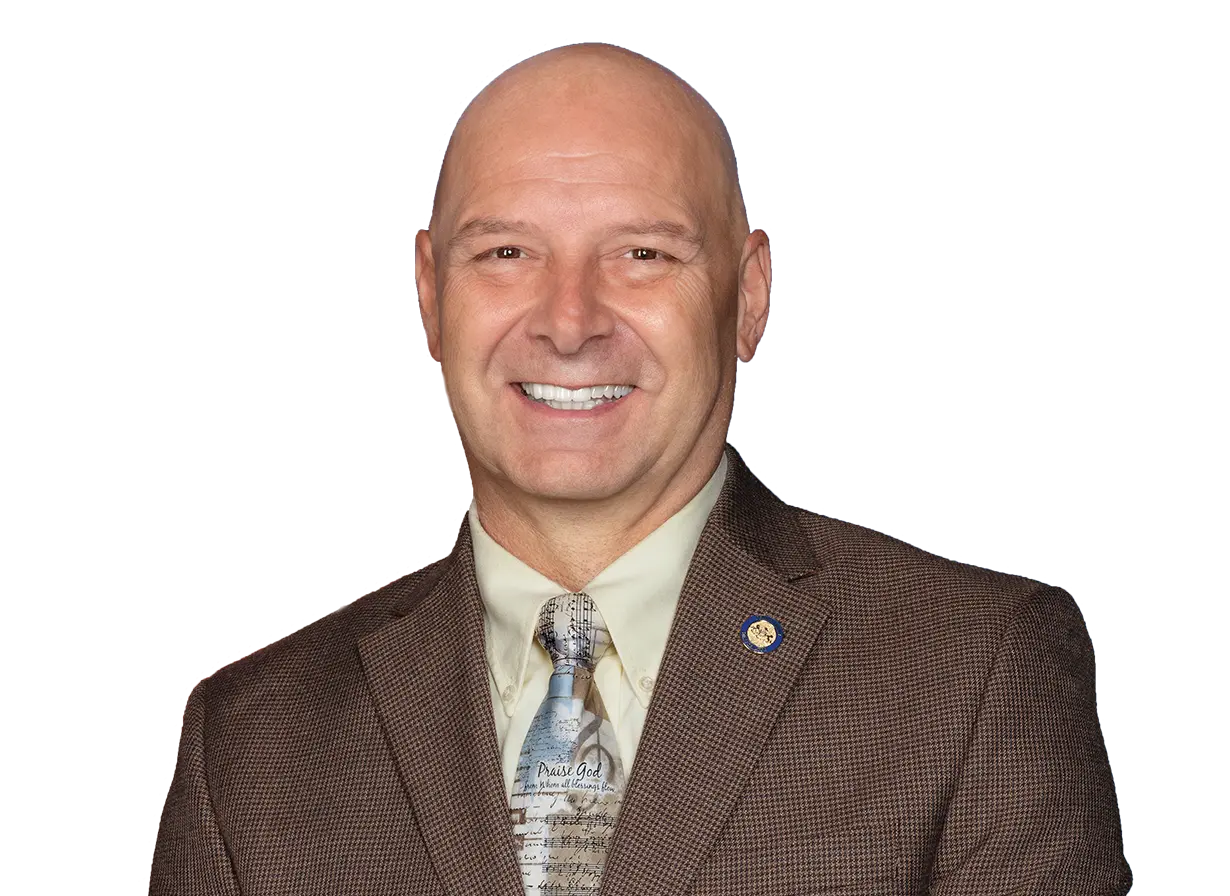

Sen. Douglas Mastriano, PhD, Colonel, U.S. Army (Retired)
The arrest of British citizen Isabel Vaughan-Spruce should alarm every person who values liberty.
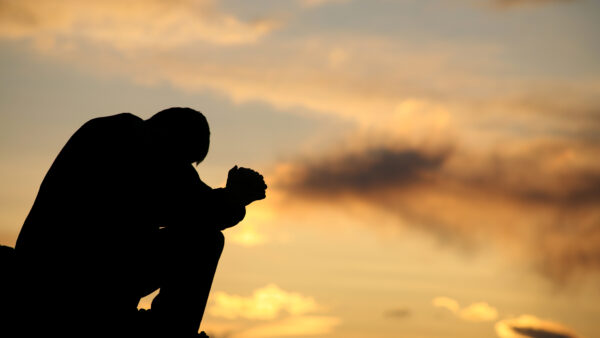
According to reports, Vaughan-Spruce was arrested for silently praying on a public street near an abortion facility in Birmingham. Her alleged “offense” was not harassment, not violence, not even speaking.
It was prayer.
Specifically, silent prayer.
Think about that for a moment. A woman was treated as a criminal because of the thoughts in her own mind directed toward God.
This is the inevitable outcome when governments abandon the principle that our rights come from our Creator — not from the state.
For centuries, Great Britain was associated with the defense of liberty. The Magna Carta in 1215 established the revolutionary idea that even rulers are bound by law. Over time, that tradition helped shape the principle of liberty of conscience: the right to believe, worship and live out one’s faith without government interference.
Yet today, under so-called “buffer zone” laws around abortion facilities, the government claims authority not only over speech — but over prayer itself.
When the state presumes the power to police silent prayer, it has crossed a dangerous line.
The question is no longer about public order. The question is about control of conscience.
And once government asserts the authority to regulate the human conscience, liberty itself is in jeopardy.
The courage shown by Isabel Vaughan-Spruce reminds us of a man deeply connected to our own commonwealth: William Penn.
Penn was an Englishman who, at the age of twenty-one, became a devoted follower of Jesus Christ after hearing the Gospel preached. In a time when religious speech outside the authority of the Crown was forbidden, Penn openly proclaimed his faith.
For that, he was arrested — more than once.
At one point, King Charles II offered Penn his freedom from the Tower of London if he would promise never again to speak the name of Jesus.
Penn refused.
He declared that he would rather remain imprisoned than deny his Lord.
That conviction changed history.
When the Crown later granted Penn land in the New World to settle a debt owed to his father, Admiral William Penn, he established Pennsylvania as a refuge for liberty of conscience. Penn understood something modern governments increasingly forget: Faith is not a privilege granted by rulers. It is a right endowed by God.
That principle became the foundation of America.
The First Amendment to the U.S. Constitution could not be clearer: “Congress shall make no law respecting an establishment of religion, or prohibiting the free exercise thereof.”
The founders understood religious liberty must be protected not only inside church walls, but in the public square.
Pennsylvania’s own Constitution affirms this even more directly. Article I, Section 3 declares: “All men have a natural and indefeasible right to worship Almighty God according to the dictates of their own consciences.”
Not a conditional right.
Not a government-granted privilege.
A natural and indefeasible right.
And Article I, Section 4 continues by guaranteeing that “no human authority can, in any case whatever, control or interfere with the rights of conscience.”
Those words were written precisely because history had already shown what happens when governments try to control faith.
Yet today we are witnessing the same pattern emerge again in the Western world.
A woman stands silently in prayer.
Police approach.
They question her.
And she is treated as a suspect — not for what she did, but for what she might be thinking.
That is not liberty.
That is authoritarianism.
Over the years, I have written letters advocating for Christians imprisoned for practicing their faith. Those letters are usually sent to governments in parts of the world where religious liberty is openly suppressed.
The case of Isabel Vaughan-Spruce is the first time I have felt compelled to write such a letter regarding a European nation.
That should deeply concern every free society.
When prayer is treated as a crime, freedom itself is under attack.
Let’s be clear: Standing quietly in a public place is not harassment. Silent prayer is not intimidation. Thinking is not a crime.
Prayer is not a crime.
What we are witnessing is something far more troubling — the steady erosion of God-given rights by governments that increasingly believe they have authority over every aspect of public life.
History teaches us that liberty is rarely destroyed in a single dramatic moment. It is chipped away gradually — one regulation, one restriction, one “reasonable limitation” at a time — until the very rights that once defined a free people are reduced to permissions granted by the state.
Pennsylvania was founded as a refuge from exactly that kind of tyranny.
As Americans — and as citizens of the commonwealth founded by William Penn — we must never forget that our rights do not come from kings, parliaments, legislatures or courts.
They come from God.
And what God grants, no government has the authority to take away.
Across the Atlantic, many Americans stand with Isabel Vaughan-Spruce and with all who believe that faith should never be policed by the state.
But this moment should also serve as a warning.
The erosion of liberty rarely stops at the water’s edge.
The same cultural forces that now seek to criminalize prayer in Britain are present here in America — pushing relentlessly to drive faith out of the public square and redefine religious liberty as a mere private preference.
We must reject that lie.
The Declaration of Independence affirms that our rights come from the “Laws of Nature and of Nature’s God,” and that they are unalienable — meaning they cannot be taken away by government decree.
If Americans forget that truth, the freedoms secured by our Constitution and by Pennsylvania’s founding charter will not disappear overnight.
But they will disappear.
One regulation at a time.
One court ruling at a time.
One surrendered liberty at a time.
The lesson of history is clear: Freedom survives only when free people are willing to defend it.
Now is the time to stand firm for the God-given rights of conscience, faith and free exercise — before the day ever comes when Americans are asked the same question Isabel Vaughan-Spruce faced:
What were you praying about?
Because in a truly free nation, the government should never dare to ask.
As the Gospel of John reminds us:
“So if the Son sets you free, you will be free indeed.” (John 8:36)